Category: Insurance Guides

  • Commercial Insurance for LLC Owners in USA – Full Guide (2026)

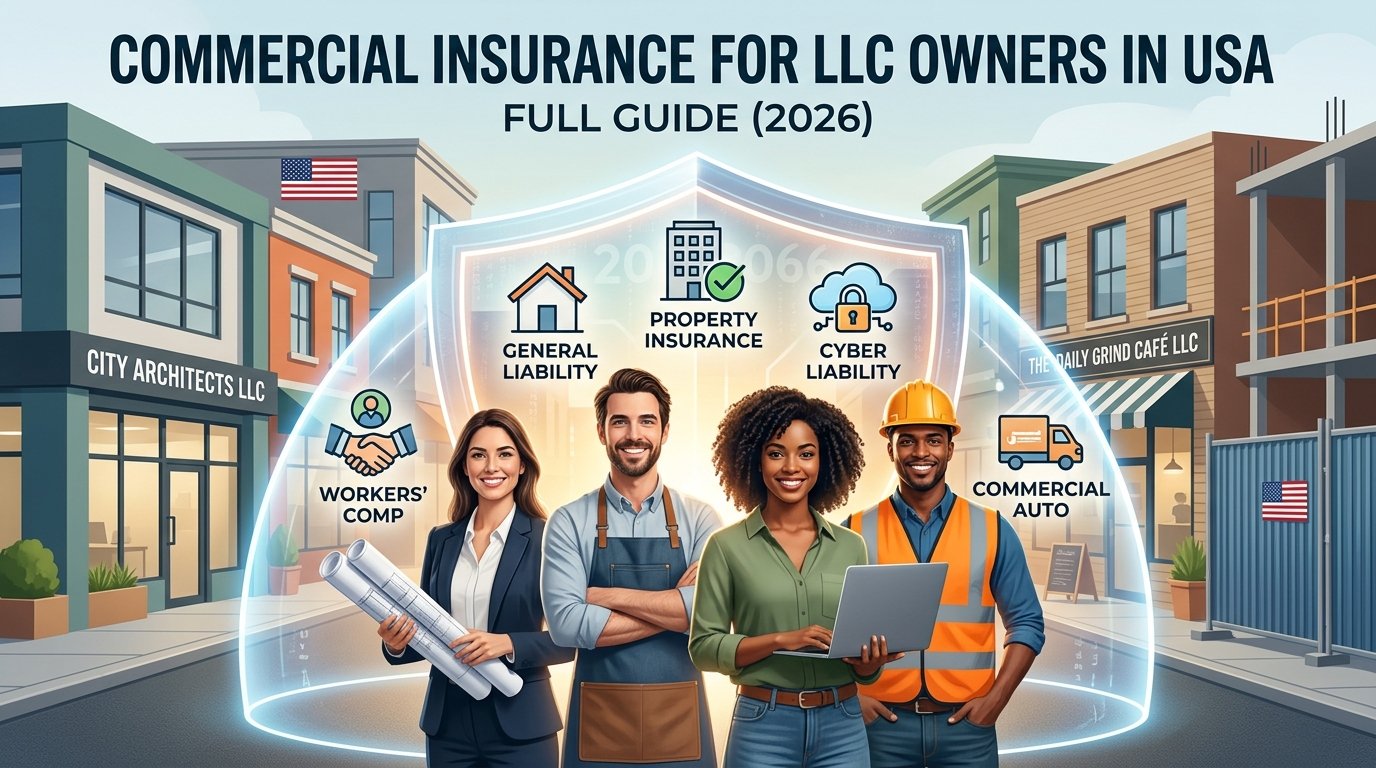
    Commercial Insurance for LLC Owners in USA – Full Guide (2026)

    Commercial Insurance for LLC Owners in USA – Full Guide (2026)

    You formed an LLC to protect your personal assets. That was smart. If someone sues your business, they can typically only go after what the company owns—not your house, your car, or your savings.

    But here’s what a lot of LLC owners don’t realize until it’s too late: an LLC is not a magic shield. It protects your personal assets from business lawsuits, yes. But it doesn’t protect your business assets from the lawsuit itself.

    Imagine this. A customer slips and falls at your store. They sue. The court awards them $200,000. Your LLC has $50,000 in the bank and some equipment. That’s all gone. And if the judgment is more than your business assets, you might have to close your doors forever.

    That’s where insurance comes in.UK Home Insurance Guide.

    Commercial insurance for LLC owners in USA is what actually protects your business. It pays the claims, the legal fees, and the settlements. Your LLC structure handles the liability; your insurance handles the financial hit.

    In this guide, I’m going to walk you through everything you need to know about commercial insurance for LLC owners in USA. We’ll cover what types of insurance you actually need, which companies offer the best policies in 2026, how much it costs, and how to avoid the common mistakes that leave business owners exposed Commercial Insurance for LLC Owners in USA.

    Let’s get started.

    Why Your LLC Still Needs Insurance

    First, let’s clear up a major misconception.

    Some business owners think, “I have an LLC, so I’m protected. I don’t need insurance.”

    That’s like thinking a seatbelt means you don’t need airbags. They work together.

    An LLC protects your personal assets from business debts and lawsuits. But it doesn’t protect the business’s assets . If your company gets sued and loses, the business itself can be wiped out.

    Insurance protects the business. It pays for:

    • Legal defense costs (which can be tens of thousands even if you win)
    • Settlements or judgments
    • Medical bills for injured customers
    • Replacing damaged equipment
    • Lost income if you have to close temporarily

    According to Brad Wiewel, a Texas business attorney, liability insurance is your “first line of defense against a lawsuit.” He advises that without proper coverage, “your entire business could be at risk” .

    So think of it this way: your LLC is the structure, and insurance is the armor. You need both commercial insurance for LLC owners in USA.

    The Essential Types of Commercial Insurance for LLC Owners
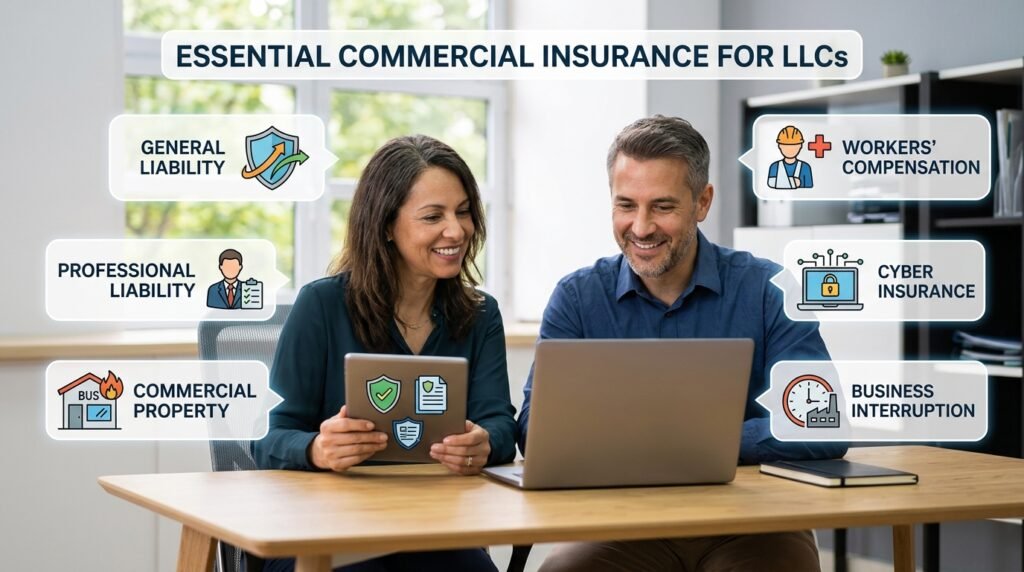
    The Essential Types of Commercial Insurance for LLC Owners

    Not every business needs every type of insurance. But there are core policies that most LLC owners should consider Commercial Insurance for LLC Owners in USA.

    1. General Liability Insurance

    This is the foundation. General liability insurance covers claims of:

    • Bodily injury: A customer slips on your wet floor and breaks their wrist .
    • Property damage: Your employee accidentally damages a client’s expensive equipment.
    • Personal and advertising injury: Someone sues you for slander, libel, or copyright infringement .

    For most small businesses, general liability is the first policy you should buy. It covers the everyday risks of running a business.

    Average cost: $400 to $2,500 per year, depending on your industry and risk factors . Professional service firms on the lower end; retail and construction on the higher end Commercial Insurance for LLC Owners in USA.

    2. Commercial Property Insurance

    If you own or lease a physical space, you need property insurance. It covers:

    • Your building (if you own it)
    • Equipment, furniture, and inventory
    • Signs and fixtures
    • Business personal property

    This policy pays to repair or replace things damaged by fire, theft, vandalism, or certain natural disasters Commercial Insurance for LLC Owners in USA.

    Note: Standard property insurance usually doesn’t cover floods or earthquakes. You need separate policies for those Commercial Insurance for LLC Owners in USA.

    3. Workers’ Compensation Insurance

    If you have employees, this is legally required in most states . In Florida, for example, construction businesses need workers’ comp with just one employee. Non-construction businesses need it with four or more employees Commercial Insurance for LLC Owners in USA.

    Workers’ comp covers:

    • Medical bills for work-related injuries
    • Lost wages while the employee recovers
    • Rehabilitation costs
    • Death benefits for families

    Even if you’re a sole owner, you might want coverage for yourself. Check your state’s rules Commercial Insurance for LLC Owners in USA.

    Average cost: Varies wildly by industry. Construction companies might pay $5,000 to $25,000+ annually; professional services might pay $500 to $2,000 .

    4. Commercial Auto Insurance

    If your business owns vehicles, you need commercial auto insurance. Personal auto policies generally don’t cover business use .

    Commercial auto covers:

    • Liability for accidents caused by your drivers
    • Damage to your vehicles
    • Medical payments
    • Uninsured/underinsured motorist coverage

    Even if employees use their personal cars for business, you may need “hired and non-owned auto” coverage to protect against liability gaps .

    Average cost: $9,000 to $15,000 per vehicle per year for trucking; less for standard business vehicles Commercial Insurance for LLC Owners in USA.

    5. Professional Liability / Errors & Omissions (E&O)

    If you provide advice or services to clients, you need this. It covers claims that you made a mistake, were negligent, or failed to deliver as promised Commercial Insurance for LLC Owners in USA.

    This is essential for:

    • Accountants
    • Consultants
    • Architects and engineers
    • Real estate agents
    • IT professionals
    • Anyone giving professional advice

    Even if you’re right, defending a lawsuit costs money. E&O insurance pays those legal costs.

    Average cost: $500 to $5,000 per year, depending on your profession and risk .

    6. Cyber Liability Insurance

    Every business that stores customer data needs cyber insurance. It covers:

    • Data breach response costs
    • Notification to affected customers
    • Credit monitoring services
    • Legal defense
    • Ransomware attacks

    With cyberattacks on the rise, this is becoming essential even for small businesses .

    Average cost: $1,000 to $7,500 per year Commercial Insurance for LLC Owners in USA.

    7. Business Interruption Insurance

    If a fire, flood, or other covered event forces you to close temporarily, business interruption insurance replaces lost income . It covers ongoing expenses like rent, payroll, and taxes while you rebuild Commercial Insurance for LLC Owners in USA.

    This is often included in a Business Owner’s Policy (which we’ll cover next).

    8. Directors and Officers (D&O) Insurance

    If your LLC has a board of directors or outside investors, D&O insurance protects their personal assets if they’re sued over management decisions . It covers claims of mismanagement, breach of fiduciary duty, or wrongful acts.

    The Business Owner’s Policy: Bundling for Savings
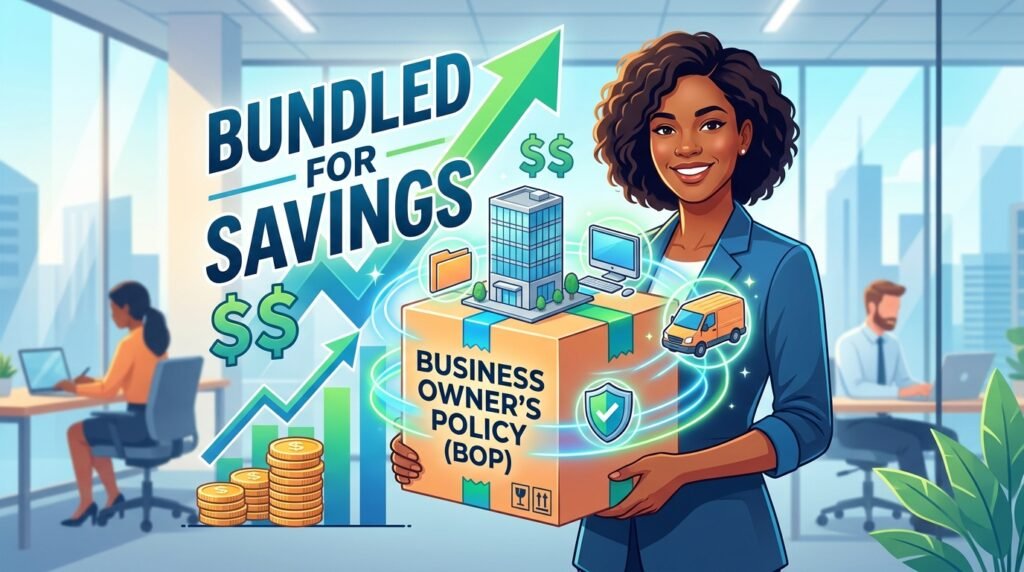
    The Business Owner's Policy: Bundling for Savings

    Many insurers offer a Business Owner’s Policy (BOP) that bundles several essential coverages together at a discount Commercial Insurance for LLC Owners in USA.

    A typical BOP includes:

    • General liability insurance
    • Commercial property insurance
    • Business interruption insurance

    Some BOPs also include crime insurance, equipment breakdown, or other coverages.

    Why a BOP makes sense: It’s cheaper than buying each policy separately, and it simplifies your insurance management. According to MoneyGeek’s 2026 analysis, the average BOP costs about $147 per month nationally .

    The Hartford offers the cheapest average BOP rates at $115 per month, while Chubb averages $178 Commercial Insurance for LLC Owners in USA.

    Top Commercial Insurance Companies for LLC Owners in 2026

    Based on expert rankings from PaymentCloud and MoneyGeek, here are the best providers for commercial insurance for LLC owners in USA .

    1. The Hartford: Best Overall

    The Hartford tops MoneyGeek’s BOP rankings with a 4.72 out of 5 score . They offer:

    • Industry-specific policies (photography, beauty shops, tech, and more)
    • A+ financial strength rating from A.M. Best
    • Average BOP cost of $115/month
    • Excellent claims process

    The Hartford has been around since 1810 and is particularly strong for small businesses. Their only weakness is a below-average digital experience Commercial Insurance for LLC Owners in USA.

    2. State Farm: Best for Local Service

    State Farm is known for personal insurance, but they also have an industry-leading small business platform . They offer:

    • Insurance for more than 300 industries and professions
    • A massive network of local agents
    • Banking, life insurance, and investments alongside business coverage

    If you want to sit across from someone and talk through your needs, State Farm is a great choice .

    3. Progressive: Best for Commercial Auto

    Progressive is famous for personal auto, but they also excel at commercial auto insurance . They cover:

    • Food trucks, dump trucks, vans, and standard vehicles
    • General liability, cyber, and workers’ comp
    • A network of independent agents for personalized advice

    For businesses with vehicles, Progressive should be on your shortlist Commercial Insurance for LLC Owners in USA.

    4. Chubb: Best for International Business

    Chubb serves everyone from small businesses to Fortune 500 companies . They offer:

    • A “Foreign Package” policy covering risks when traveling abroad
    • Comprehensive cyber insurance
    • BOP, workers’ comp, and professional liability

    If your LLC does business internationally or has complex needs, Chubb is worth considering .

    5. NEXT Insurance: Best for Bundling and Online Experience

    NEXT is a digital-first insurer focused exclusively on small businesses . They offer:

    • 10% bundling discount for multiple policies
    • Coverage for over 50 professions
    • Easy online quotes and policy management

    NEXT is ideal if you want to handle everything from your phone without talking to an agent.

    6. Travelers: Best for Commercial Property

    Travelers is famous for commercial property insurance . They offer:

    • Tailored policies for specific industries
    • Advanced risk management technology
    • Local agents who work closely with clients

    If you own physical property or equipment, Travelers deserves a look.

    7. Nationwide: Best for Full-Service Financial Solutions

    Nationwide offers insurance plus banking, borrowing, and employee benefits . They specialize in:

    • Unique industries like breweries and consulting
    • Agriculture insurance
    • Comprehensive financial services

    For LLC owners who want one place for all business needs, Nationwide delivers.

    8. Hiscox: Best for Sole Proprietors and Side Hustles

    Hiscox serves over 400,000 small business clients and specializes in single-person operations . They offer:

    • Tailored policies for more than 180 professions
    • Strong professional liability (E&O) coverage
    • Easy online purchasing

    If you’re a solo LLC owner, Hiscox is worth checking out.

    How Much Does Commercial Insurance Cost in 2026?

    Costs vary widely based on your industry, location, number of employees, and coverage limits. Here are national averages from industry data :

    Policy TypeAverage Annual Cost
    General Liability$1,281
    Business Owner’s Policy (BOP)$1,876
    Professional Liability (E&O)$500 – $5,000+
    Workers’ Compensation$500 – $25,000+
    Commercial Auto$2,400 – $15,000+
    Cyber Liability$1,000 – $7,500
    Commercial Property$1,000 – $10,000+

    Industry-Specific Examples

    Professional Services (e.g., accounting, consulting):

    • General Liability: $400 – $1,200
    • Professional Liability: $500 – $3,000
    • Workers’ Comp: $500 – $2,000
    • Total: $1,500 – $7,000

    Retail:

    • General Liability: $500 – $2,500
    • Property Insurance: $1,000 – $5,000
    • Workers’ Comp: $1,000 – $4,000
    • Total: $3,000 – $12,000

    Construction:

    • General Liability: $2,500 – $7,500
    • Workers’ Comp: $5,000 – $25,000+
    • Commercial Auto: $2,400 – $6,000
    • Total: $10,000 – $50,000+

    Restaurants:

    • General Liability: $2,000 – $6,000
    • Workers’ Comp: $3,000 – $10,000
    • Property Insurance: $2,000 – $8,000
    • Total: $8,000 – $30,000

    Technology Companies:

    • General Liability: $400 – $1,500
    • Professional Liability: $1,000 – $5,000
    • Cyber Liability: $1,000 – $7,500
    • Total: $3,500 – $18,000

    Note: These are ranges. Your actual costs depend on your specific situation .

    How to Choose the Right Insurance for Your LLC

    How to Choose the Right Insurance for Your LLC

    With so many options, how do you decide? Follow this step-by-step approach.

    Step 1: Assess Your Risks

    Sit down and think about your business honestly:

    • Do you have a physical location where customers visit? (You need general liability and property insurance.)
    • Do you have employees? (You need workers’ comp.)
    • Do you own vehicles? (You need commercial auto.)
    • Do you give professional advice? (You need E&O.)
    • Do you store customer data? (You need cyber insurance.)
    • Could a disaster shut you down? (You need business interruption.)

    Step 2: Know Your Legal Requirements

    Check your state’s requirements. Most states require workers’ comp if you have employees . If you have vehicles, commercial auto is mandatory . Some professions have specific licensing requirements for insurance.

    Step 3: Consider a BOP

    For most small LLCs, a Business Owner’s Policy is the smartest starting point. It bundles general liability, property, and business interruption at a discount . You can then add specialized coverages like E&O or cyber as needed.

    Step 4: Get Multiple Quotes

    Don’t just buy from the first company you talk to. Get quotes from at least three providers. Compare coverage limits, deductibles, and exclusions—not just price .

    Step 5: Check Financial Strength

    Look up each insurer’s A.M. Best rating. You want an “A” or higher. This tells you the company has the financial strength to pay claims .

    Step 6: Review Annually

    Your business changes. Your insurance should too. Review your policies every year with your agent to make sure you’re not overpaying or underinsured .

    Common Mistakes LLC Owners Make with Insurance
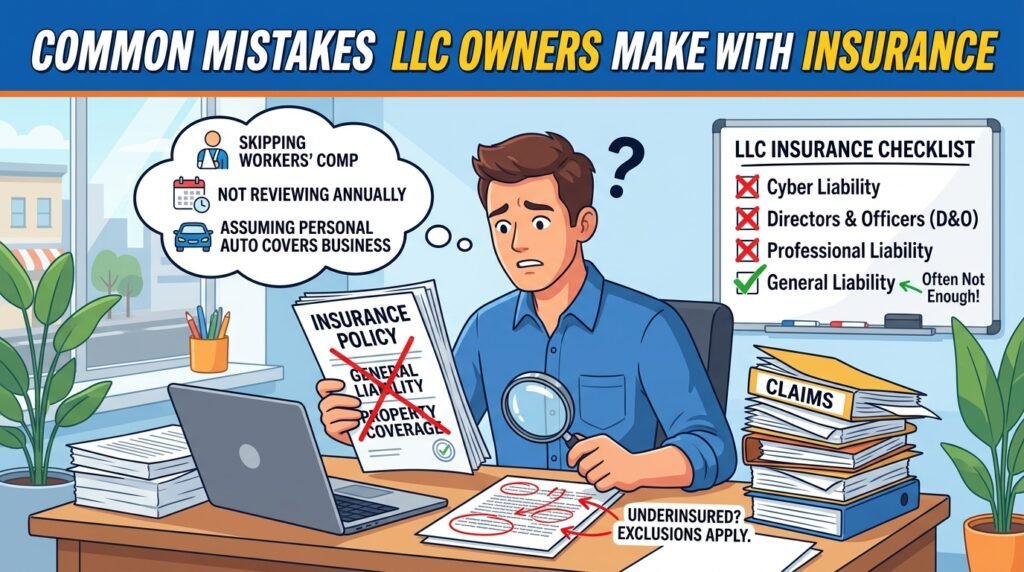
    Common Mistakes LLC Owners Make with Insurance

    Avoid these pitfalls.

    Mistake 1: Thinking the LLC Is Enough

    As we covered, an LLC protects your personal assets, not the business’s. Without insurance, a lawsuit can bankrupt your company .

    Mistake 2: Buying Minimum Coverage

    Minimum limits might save money today, but they can cost you everything tomorrow. A single serious injury claim can exceed $1 million easily. Make sure your limits reflect real-world risks.

    Mistake 3: Ignoring Cyber Insurance

    Small businesses are prime targets for cyberattacks because they often have weaker security. If you store any customer data—emails, credit cards, health information—you need cyber insurance .

    Mistake 4: Not Reading the Fine Print

    Every policy has exclusions. Know what yours are. Ask your agent to explain anything you don’t understand .

    Mistake 5: Forgetting to Update Coverage

    Bought new equipment? Hired more employees? Started offering new services? Tell your insurer. Your coverage needs to keep up with your business.

    Frequently Asked Questions

    Q: Is commercial insurance required for LLCs?
    A: It depends. Workers’ compensation is required in most states if you have employees . Commercial auto is required if you own business vehicles . Other types—general liability, property, E&O—are not legally required but are strongly recommended to protect your business.

    Q: What’s the difference between general liability and professional liability?
    A: General liability covers physical risks—slip-and-fall accidents, property damage, bodily injury. Professional liability (E&O) covers mistakes in your professional services—errors, negligence, failure to deliver .

    Q: Can I get commercial insurance if I have bad credit?
    A: Yes. In most states, insurers can use credit-based insurance scores to set rates. But even with bad credit, you can find coverage. You may pay higher premiums, but you won’t be denied solely for credit .

    Q: How do I file a claim?
    A: Contact your insurer immediately. Most have 24/7 claims lines. Document everything—photos, receipts, police reports if applicable. Cooperate fully with the claims adjuster .

    Q: What is a BOP and do I need one?
    A: A Business Owner’s Policy bundles general liability, property, and business interruption insurance at a discount. Most small businesses should start with a BOP and add other coverages as needed .

    Q: How much commercial insurance do I need?
    A: It depends on your industry and risk exposure. General liability limits of $1 million per occurrence and $2 million aggregate are common starting points . Professional services often need higher limits. Discuss with your agent.

    Q: Can I deduct commercial insurance premiums on my taxes?
    A: Yes. Business insurance premiums are generally tax-deductible as ordinary business expenses. Consult your CPA for specific advice.

    Protect Your LLC the Right Way

    Protect Your LLC the Right Way

    Your LLC is a powerful tool. It separates your personal life from your business life. But it doesn’t protect your business from the financial devastation of a lawsuit or disaster.

    That’s where commercial insurance for LLC owners in USA comes in. It’s the safety net that keeps your doors open when things go wrong.

    Here’s your action plan:

    1. Assess your risks. What could go wrong in your business?
    2. Know your legal requirements. Check state laws for workers’ comp and auto.
    3. Start with a BOP from a top provider like The Hartford or NEXT.
    4. Add specialized coverages like E&O or cyber as needed.
    5. Get multiple quotes and compare carefully.
    6. Review your policies annually as your business grows.

    The money you spend on insurance is the price of peace of mind. It means you can focus on growing your business instead of lying awake worrying about “what if.”

    Your LLC protects your personal assets. Let insurance protect your business assets. Together, they give you the complete protection you need.
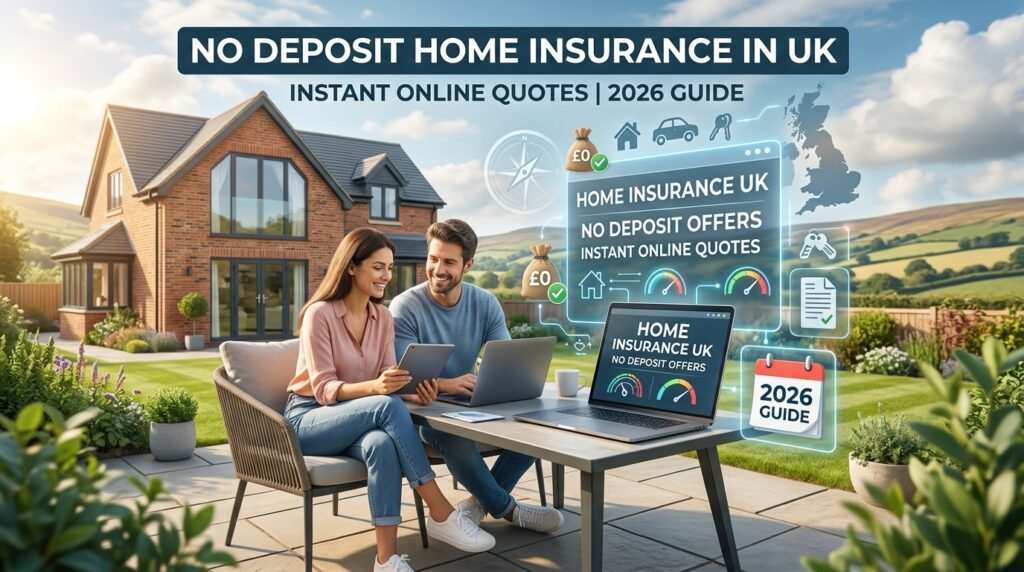
  • No Deposit Home Insurance in UK – Instant Online Quotes (2026 Guide)

    No Deposit Home Insurance in UK – Instant Online Quotes (2026 Guide)

    No Deposit Home Insurance in UK – Instant Online Quotes (2026 Guide)

    You’ve just moved into a new flat No Deposit Home Insurance in UK. Or maybe you’ve finally sorted out that mortgage. You’re ready to protect your home and everything in it. You go online, find a policy that looks decent, and then you hit the checkout.

    Bam. They want £200 upfront. Right now. Today.

    For a lot of us, that stings. Rent is due. Bills are piling up. Coming up with a massive lump sum for insurance just isn’t realistic. But here’s the thing: you shouldn’t have to choose between eating this week and protecting your home No Deposit Home Insurance in UK.

    So, can you actually get home insurance in UK without paying a huge deposit upfront?

    The good news? Yes, absolutely. In 2026, the market has changed. Thanks to new rules from the Financial Conduct Authority (FCA) and smarter options from providers, paying monthly without a hefty down payment is easier than ever .

    In this guide, I’m going to walk you through exactly how to get home insurance in UK with no deposit, instant online quotes, and the flexibility to pay in a way that actually works for your budget.

    Let’s get into it.

    What Does “No Deposit” Actually Mean?

    First, let’s clear up a common confusion.

    When you see an advert for “no deposit” or “zero down” home insurance, it doesn’t mean you get the first month free. It means you don’t have to pay a large lump sum upfront beyond your first monthly payment .

    In the old days, some insurers required you to pay a chunk of the annual premium—sometimes a third or even half—just to start the policy. Today, most major providers offer a zero deposit option where you simply pay for month one, and coverage starts immediately .

    For example, NatWest makes this very clear: with their policies, there’s 0% interest and no extra cost if you choose to pay monthly . That means you spread the cost evenly across the year without being penalized.

    So when we talk about home insurance in UK with no deposit, we’re really talking about policies that let you activate coverage by paying just your first month’s premium. It’s a game-changer for anyone living paycheck to paycheck No Deposit Home Insurance in UK.

    Why Paying Monthly Matters More Than Ever

    You might be thinking, “Why wouldn’t I just pay annually if I could?”

    Here’s the reality. According to the FCA, nearly half of all home insurance policies in the UK—around 23 million—are paid monthly . Why? Because most people simply cannot afford to pay for a whole year upfront No Deposit Home Insurance in UK.

    Insurance is a necessity, not a luxury. If your home flooded tomorrow and you weren’t insured, you’d be looking at thousands of pounds in repair bills. But needing coverage and having £300 in your account today are two different things No Deposit Home Insurance in UK.

    The good news is that the FCA has been watching the market closely. They found that some providers weren’t giving fair value to people paying monthly. As a result, premium finance rates have fallen by an average of 4.1 percentage points since 2022 .

    What does that mean for you? The average household is now saving about £3 a year on home insurance premiums thanks to these changes . It doesn’t sound like much, but it’s a sign that the market is moving in the right direction for monthly payers No Deposit Home Insurance in UK.

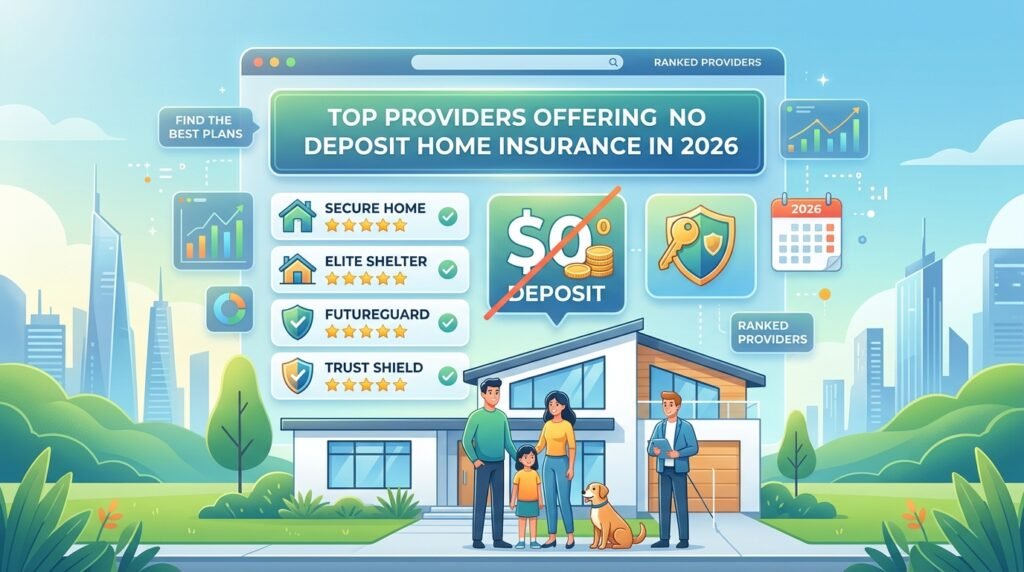
    Top Providers Offering No Deposit Home Insurance in 2026

    Top Providers Offering No Deposit Home Insurance in 2026

    Let’s look at who’s actually offering these flexible options right now.

    1. NatWest: Clear 0% Interest Monthly Payments

    NatWest is a standout option for home insurance in UK with no deposit. Their website explicitly states that with 0% interest, there’s no extra cost if you choose to pay monthly for your annual policy .

    Why it’s great:

    • 0% APR on monthly payments—no hidden interest 
    • Defaqto 5-star rating on their policies 
    • Optional extras like accidental damage, home emergency, and legal protection 
    • Coverage up to £1 million for buildings and £175,000 for contents on their standard plan 

    The bottom line: You pay exactly the same total amount as someone paying annually, just spread out over 12 months. That’s fair.

    2. Quotemehappy (Aviva): Online-Only Simplicity

    Quotemehappy is Aviva’s online-only brand. They offer three levels of cover—Essentials, Essentials Plus, and Premier—and you can manage everything online without phone calls .

    Why it’s great:

    • Online self-service to manage your policy and track claims 
    • 24/7 emergency claims line 
    • Unlimited cover for alternative accommodation if your home is uninhabitable 
    • Optional extras like personal belongings cover for items taken outside the home 

    The catch: They don’t have a phone line for customer support queries—everything is online or via their contact form . But for tech-savvy users, that’s a plus.

    3. Hiro: The New Tech Challenger

    Hiro is a brand-new player launching in 2026, and they’re shaking things up. They’re an app-based insurer that promises quotes in just 60 seconds with only 4-6 questions .

    Why it’s great:

    • Lightning-fast quotes—most insurers ask 50+ questions; Hiro asks less than 6 
    • Smart tech discounts—if you have cameras, video doorbells, or leak detectors, you get cheaper premiums 
    • App-first experience that feels more like Uber than traditional insurance 

    Who it’s for: Tech-savvy homeowners who want a slick, modern experience and are willing to install smart home devices to save money.

    4. MoneySuperMarket and Compare the Market: Comparison Power

    Sometimes the best home insurance in UK with no deposit isn’t from a single company—it’s from finding the right deal through comparison sites.

    MoneySuperMarket compares quotes from 88 providers . Compare the Market compares 79 . They both show you which policies offer monthly payment options.

    Recent data (December 2025):

    • 10% of customers were quoted £119 or less for combined buildings and contents insurance through Compare the Market 
    • 51% of customers could save up to £191 on their buildings and contents insurance 

    Pro tip: Use these sites, but always check the payment terms before buying. Look for “pay monthly” options and confirm there’s no hidden deposit.

    How Much Does Home Insurance Cost in 2026?

    Let’s talk numbers. Here’s what you can expect to pay for home insurance in UK based on recent data .

    Policy TypeAverage Annual CostTypical Monthly Payment
    Contents Only£57 – £76£4.75 – £6.33
    Buildings Only£174 – £209£14.50 – £17.42
    Buildings & Contents Combined£200 – £255£16.67 – £21.25

    Important: These are averages. Your actual cost depends on where you live, the age of your property, the rebuild value, and your claims history .

    For the cheapest 10% of customers, combined policies can be as low as £143.90 annually . That’s under £12 per month—less than a takeaway dinner.

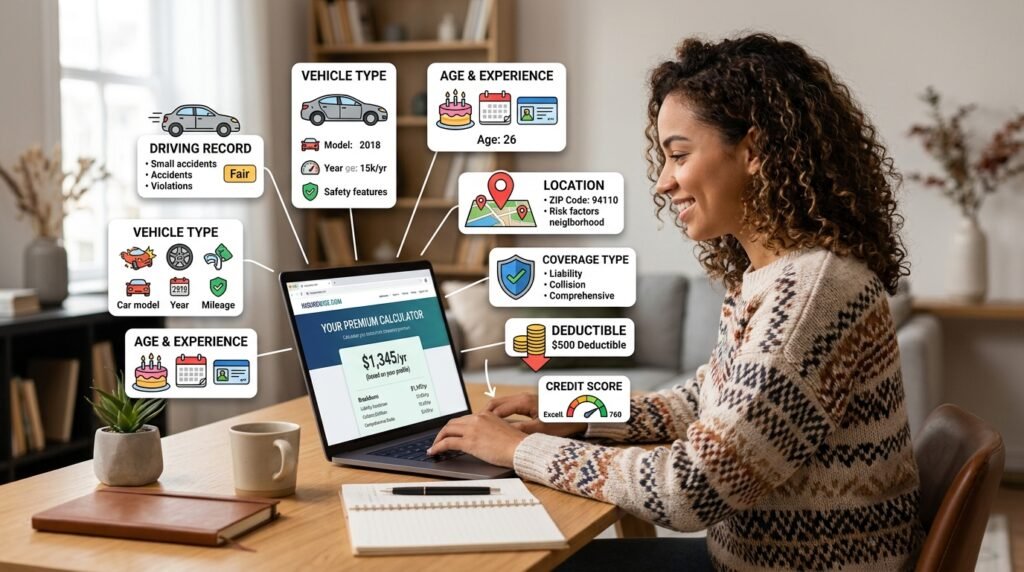
    What Actually Affects Your Premium?

    What Actually Affects Your Premium?

    Understanding what drives your insurance cost helps you find cheaper home insurance in UK with no deposit.

    Location, Location, Location

    Your postcode matters a lot. Homes in high-crime areas or flood zones pay more . Statistical data shows that regional risk profiles directly impact premiums .

    Property Age and Construction

    Older homes often cost more to insure because they’re more expensive to repair . If you have non-standard construction (like timber frame or thatched roof), expect higher premiums .

    Security Measures

    Homes with burglar alarms, smoke detectors, and smart security systems statistically have fewer losses . Installing these can lower your premium .

    Claims History

    If you’ve made claims before, you’re viewed as higher risk . A history of no claims means you can build up a no-claims discount .

    Voluntary Excess

    This is the amount you agree to pay toward a claim. A higher voluntary excess means a lower annual premium . Just make sure you can afford it if something happens.

    Optional Extras to Consider

    When you’re comparing home insurance in UK policies, you’ll see optional add-ons. These cost extra but can be worth it.

    Accidental Damage

    Covers mishaps like spilling wine on the carpet or putting your foot through the ceiling .

    Home Emergency Cover

    Provides immediate help for emergencies like a broken boiler in winter or a leaking pipe . Typically covers call-out, labour, and parts up to £500 .

    Personal Possessions Cover

    Protects items you take outside your home—laptops, phones, jewellery . If your laptop is stolen from a coffee shop, you’re covered .

    Legal Protection

    Covers legal expenses for disputes with neighbours, tradespeople, or employment issues .

    Who Needs Home Insurance?

    It’s not just homeowners. Different people need different types of cover.

    Homeowners

    If you own your home, you need buildings insurance. Your mortgage lender will almost certainly require it . You should also consider contents insurance for your belongings .

    Renters

    You don’t need buildings insurance—that’s your landlord’s responsibility . But contents insurance is a smart move to protect your furniture, electronics, and clothes .

    Landlords

    You need buildings insurance for the property you rent out. If you provide furniture, consider landlord contents insurance .

    Students

    If you live in halls, check if you’re covered under your parents’ policy first . If not, student contents insurance is cheap and protects your laptop, phone, and other valuables .

    Flat Sharers

    You only need to protect your own belongings . Shared households can affect premiums, so be honest about your living situation .

    How to Get the Best No Deposit Deal

    How to Get the Best No Deposit Deal

    Follow these steps to secure affordable home insurance in UK with zero deposit.

    Step 1: Calculate Your Sums Insured Accurately

    For buildings insurance, you need the rebuild cost—not the market value . This is what it would cost to completely rebuild your home from scratch.

    For contents insurance, go room by room and add up what it would cost to replace everything . Don’t guess. Being accurate means you’re not overpaying or underinsured.

    Step 2: Improve Your Security

    Fit approved locks, smoke alarms, and a burglar alarm . Some insurers offer discounts for smart home tech like video doorbells and leak detectors .

    Step 3: Increase Your Voluntary Excess

    A higher excess lowers your premium . Just make sure you can afford to pay it if you need to claim.

    Step 4: Shop Around Every Year

    Don’t auto-renew . Loyalty doesn’t pay in insurance. Use comparison sites to see what’s available each year .

    Step 5: Check Payment Terms

    When you find a quote, look for the monthly payment option. Confirm there’s no deposit beyond the first month. NatWest’s 0% APR monthly option is exactly what you want .

    What’s Not Covered?

    Understanding exclusions is just as important as knowing what’s covered.

    Standard home insurance in UK policies typically do not cover :

    • General wear and tear (carpets wearing thin over time)
    • Negligence (leaving doors unlocked and getting burgled)
    • Lack of maintenance (untreated damp causing damage)
    • Unoccupied properties (if left empty over 30-60 days, you need specialist cover)
    • Intentional damage

    Always read the policy documents carefully .

    The FCA’s Impact on Monthly Payments

    In February 2026, the FCA announced some welcome news. Premium finance rates have fallen, saving consumers around £157 million a year combined .

    For home insurance, that’s an average saving of £3-£4 per year . It’s modest, but it’s moving in the right direction.

    The FCA also confirmed they won’t impose a price cap, as that could restrict access to cover for people who need monthly payments . Instead, they’ll keep monitoring the market and expect firms to offer fair value .

    Frequently Asked Questions

    Q: Can I really get home insurance with no deposit in the UK?
    A: Yes. “No deposit” means you pay your first month’s premium and coverage starts immediately, with no extra upfront lump sum. Providers like NatWest offer this with 0% APR on monthly payments .

    Q: Is it more expensive to pay monthly?
    A: It can be, but not always. NatWest offers 0% APR on monthly payments, meaning you pay the same total as annual payers . Always check the APR before signing.

    Q: What’s the cheapest home insurance in the UK?
    A: According to recent data, 10% of customers were quoted £119 or less for combined buildings and contents insurance . The cheapest option depends on your specific circumstances.

    Q: Do I need buildings insurance if I rent?
    A: No. Your landlord is responsible for the building . You only need contents insurance for your belongings .

    Q: How quickly can I get a quote?
    A: Most comparison sites give quotes in minutes . New apps like Hiro promise quotes in under 60 seconds .

    Q: What’s the difference between buildings and contents insurance?
    A: Buildings insurance covers the structure—walls, roof, windows, permanent fixtures . Contents insurance covers your belongings—furniture, electronics, clothes, jewellery .

    Q: Can I get home insurance if my house is empty for long periods?
    A: Standard policies usually only cover unoccupied properties for 30-60 days . If your home is empty longer, you need specialist unoccupied property insurance .

    Protect Your Home Without Breaking the Bank

    Protect Your Home Without Breaking the Bank

    Finding home insurance in UK with no deposit isn’t just possible—it’s becoming the new normal. Thanks to regulatory changes and competition among providers, you can now spread the cost without paying a massive lump sum upfront.

    Here’s your action plan:

    1. Calculate your rebuild cost and contents value accurately.
    2. Compare quotes on MoneySuperMarket or Compare the Market .
    3. Look for monthly payment options with 0% APR like NatWest offers .
    4. Check optional extras—add only what you actually need.
    5. Read the fine print to understand exclusions and excess amounts.

    The most important thing is to get covered. Going without insurance is a gamble you don’t want to take. A fire, flood, or burglary could cost you everything.

    With no deposit options available and monthly payments more affordable than ever, there’s no reason to wait. Protect your home, protect your belongings, and protect your peace of mind—all without emptying your bank account today.

    Your home is your biggest asset. Insure it wisely.

  • Best Zero Down Car Insurance Options in USA (2026 Updated)

    Best Zero Down Car Insurance Options in USA (2026 Updated)

    Best Zero Down Car Insurance Options in USA (2026 Updated)

    You need Best Zero Down Car Insurance Options in USA. You can’t drive off the dealership lot without it. You can’t even renew your registration without proof of coverage. But sometimes, life happens. Maybe your bank account is running on fumes this week. Maybe you just had to pay an unexpected repair bill. And now the insurance company is asking for $300 or $400 upfront just to start your policy.

    That stings.

    If you’re in that situation, you’ve probably typed “no deposit car insurance” into Google and hoped for a miracle. You might have seen ads promising coverage for zero down. But is that real? Can you actually insure your car without paying a dime today?

    The short answer is yes and no. Let me explain Zero Down Car Insurance Option.

    In this guide, I’m going to walk you through the best zero down car insurance option available in the USA right now. We’ll separate the myths from the facts, look at companies that offer flexible payment plans, and show you how to get covered even when your wallet is light.

    By the time you’re done reading, you’ll know exactly how to get legal on the road without breaking the bank Zero Down Car Insurance Option.

    What “Zero Down” Really Means in Car Insurance

    First, we need to clear up a major misunderstanding.

    When you see an ad for “no down payment car insurance,” it doesn’t mean you get coverage for free. Insurance companies aren’t charities. They can’t let you drive around insured without collecting something upfront .

    What it actually means is that you won’t pay an extra fee on top of your first month’s premium . In the old days, many insurers required a big lump sum—sometimes a third of your six-month policy—just to start. Now, more and more companies let you begin by paying only the first month’s bill Zero Down Car Insurance Option.

    So when we talk about a zero down car insurance option, we’re really talking about policies that let you activate coverage by paying just your first month’s premium, with no extra deposit required .

    This is huge for people living paycheck to paycheck. Instead of needing $400 today, you might only need $100 or $120. That’s a lot easier to scrape together Zero Down Car Insurance Option.

    Can You Really Get Insurance with $0 Down Payment?

    Here’s where it gets interesting.

    Most traditional insurers will always require some payment upfront. It’s usually the first month’s premium, sometimes plus a small fee . But there are companies changing the game Zero Down Car Insurance Option.

    OCHO is one of them. They’ve created a model that actually lets you start coverage with $0 down in many cases . How do they do it? They’re not an insurance company—they’re an insurance agency with a financing arm called OCHO Pay. They give you an interest-free loan to cover the upfront cost that the insurance company demands. You then pay that loan back in smaller, manageable installments .

    This is about as close to a true zero down car insurance option as you’ll find in 2026.

    Other companies, like The General, advertise low down payments and flexible terms for drivers with less-than-perfect credit . They’ve been around for 60 years and specialize in helping people who’ve had lapses in coverage or credit challenges Zero Down Car Insurance Option.

    Top Companies Offering Low or Zero Down Payment Plans

    Top Companies Offering Low or Zero Down Payment Plans

    Let’s look at the specific companies that offer flexible upfront payment options. Remember, “zero down” usually means paying only the first month, but some options get you even closer to true $0 start Zero Down Car Insurance Option.

    1. OCHO: The Zero Down Innovator

    OCHO is worth a special mention because they’ve built their entire business around solving this problem. Their CEO came from a microlender background and realized the traditional insurance model was punishing low-income drivers .

    How it works: You get a quote through OCHO’s digital agency. They find you a policy from a standard insurer. Then OCHO Pay steps in and lends you the money for the down payment at 0% APR. You pay it back in installments that fit your budget .

    The result: Many customers get a true zero down car insurance option. They’re insured immediately, but they don’t pay anything until later.

    The catch: There’s a small broker fee, about $7 per payment, to cover the backend work . But compared to the alternative of no insurance or a high-interest loan, that’s a bargain.

    2. The General: Low Down Payments for High-Risk Drivers

    The General has built its reputation on saying “yes” when other companies say “no.” If you’ve had a lapse in coverage, a DUI, or credit issues, they’re often willing to work with you .

    How it works: The General offers low down payments and flexible monthly installments. You can get a quote online in under two minutes and often start coverage the same day .

    Why it’s a good option: They’re transparent about serving drivers who need a break. Their famous spokesperson Shaquille O’Neal even talks about how The General gave him a break on his first car back in 1989 .

    3. GEICO, Progressive, and State Farm: The Monthly Billing Approach

    The big national carriers also offer what’s essentially a zero down car insurance option in the form of monthly billing. They don’t call it “no deposit,” but the effect is the same: you pay your first month’s premium and you’re covered .

    According to WalletHub’s 2025 analysis, GEICO, AAA, and USAA are among the top companies for cheap insurance with no additional deposit beyond the first month .

    Insurify’s Florida data shows State Farm averaging $106 per month for liability-only coverage, which means you could start a policy for just over $100 . Progressive and GEICO were also in the competitive range.

    4. Regional and Online-First Carriers

    Sometimes the best deal comes from smaller, regional insurers or newer online-only companies. They’re often more flexible than the giant national brands . They have lower overhead and can offer more creative payment structures.

    If you live in a state like Colorado, options from companies like Hartford or Nationwide might offer waived deposit structures or zero-down monthly plans .

    What to Watch Out For

    Before you jump at the first “no money down” ad you see, let’s talk about the pitfalls.

    Higher Monthly Premiums

    Companies that offer low upfront costs often charge higher monthly premiums to make up for it . They’re taking a risk on you, so they price that risk into your rates. Always compare the total cost over six months or a year, not just the first payment.

    Stricter Cancellation Policies

    If you miss that first payment with a buy-now-pay-later plan, you might get cancelled faster than with a traditional insurer. Some have no grace period at all . That means you could be driving uninsured without even realizing it.

    Misleading Marketing

    Be very careful with ads promising “instant insurance with no upfront cost.” Legitimate insurers must collect something before coverage activates . If a company claims you can start for absolutely nothing with no payment later, it’s likely a scam .

    Watch out for these phrases:

    • “First month free” – usually means the first payment is postponed, not waived
    • “Guaranteed approval” – often comes with hidden fees
    • “Zero risk trial” – may have short cancellation windows that leave you unprotected 

    The Fine Print on Buy Now, Pay Later

    BNPL for insurance sounds great, but read the terms. Some plans are really just standard monthly billing dressed up with fancy marketing. Others charge fees or have strict rules about missed payments .

    How to Qualify for the Best Zero Down Options

    How to Qualify for the Best Zero Down Options

    Not everyone gets approved for the lowest upfront costs. Insurance companies look at your risk profile. Here’s how to improve your chances.

    Maintain Continuous Coverage

    This is the single biggest factor. If you let your insurance lapse, even for a few days, you become “high risk” in the insurers’ eyes . They’ll want more money upfront because they don’t trust you’ll keep paying.

    OCHO’s team has inside knowledge that 201 days of continuous coverage is the magic number to move you from the high-risk category to “preferred customer” status . If you’re close to that mark, hang in there.

    Improve Your Credit History

    In most states, insurers use credit-based insurance scores to set rates. Paying bills on time and keeping credit card balances low can lead to lower premiums and lower upfront costs .

    Enroll in Auto-Pay

    Many insurers offer a discount for enrolling in automatic payments. More importantly, it signals to them that you’re reliable . That can help you qualify for better payment terms.

    Bundle Policies

    If you have renters or homeowners insurance, bundling them with your auto policy can lower your overall cost and sometimes reduce upfront requirements .

    Ask About Discounts

    Don’t be shy. Ask the agent or check the website for every discount you might qualify for. Safe driver, good student, defensive driving course, military, professional organizations—they add up .

    Alternatives to Zero Down Insurance

    If you’re still struggling to find a zero down car insurance option that works, here are some alternatives.

    Pay-Per-Mile Insurance

    Companies like Mile Auto charge a base rate plus a few cents per mile driven. This can lower your overall premium, which also lowers your upfront cost . It’s great for people who don’t drive much.

    Usage-Based Insurance

    Programs like Progressive’s Snapshot or Nationwide’s SmartRide track your driving habits. Safe drivers can earn discounts. Some programs even guarantee your rates won’t increase for enrolling .

    State Minimum Coverage

    If you’re really in a bind, consider buying only the minimum liability coverage required by your state. This will be the cheapest possible policy, so your first payment will be as low as possible .

    Warning: Minimum coverage often isn’t enough if you cause a serious accident. You could be personally sued for the difference. Use this only as a temporary measure.

    CDFI Loans or Assistance Programs

    Some Community Development Financial Institutions offer small loans or assistance for essential expenses like car insurance. It’s worth checking if there are programs in your area.

    The True Cost of No Down Payment

    Let’s do some math.

    Suppose a traditional six-month policy costs $1,200 total. If you pay in full upfront, you might get a discount and pay only $1,110. That’s a savings of $90 .

    If you choose monthly payments with no deposit, you’ll pay roughly $200 per month. Over six months, that’s $1,200 total—no discount, but no big upfront hit.

    If you use a zero down car insurance option like OCHO that finances the down payment, you’ll pay the monthly premium plus a small fee for the financing. Over time, it costs more than paying upfront. But it costs less than getting a ticket for driving uninsured or causing an accident with no coverage.

    The key is to use these options as a bridge, not a permanent solution. Once you’re on your feet, try to save up and pay in full at renewal to capture those discounts.

    Frequently Asked Questions

    Q: Is zero down car insurance really possible?
    A: True zero down—where you pay nothing at all and get coverage—doesn’t exist in the traditional sense. You’ll always have to pay something to activate a policy . However, companies like OCHO offer a zero down car insurance option by lending you the money for the down payment, which you pay back later .

    Q: What’s the difference between no deposit and first-month-only billing?
    A: “No deposit” usually means there’s no extra fee beyond your first month’s premium. First-month-only billing means exactly that—you pay for month one, and coverage starts. They’re essentially the same thing in practice .

    Q: Which company has the cheapest no-deposit insurance?
    A: According to WalletHub, GEICO, AAA, and USAA are top picks for cheap insurance with no additional deposit . State Farm also offers competitive rates starting around $106 per month in some states . The cheapest option for you depends on your driving record, location, and credit.

    Q: Can I get insurance with a suspended license?
    A: It’s very difficult. Most insurers require a valid driver’s license to issue a policy. If your license is suspended, you may need to look at non-owner insurance or wait until it’s reinstated.

    Q: Will my insurance start immediately with no down payment?
    A: Coverage starts once your first payment is processed. If you pay by credit card online, it’s usually instant. If you use a financing option like OCHO, they coordinate with the insurer to get you covered right away .

    Q: Does no-deposit insurance cost more in the long run?
    A: Yes, typically. Paying monthly instead of annually means you miss out on pay-in-full discounts. You might also pay financing fees. But for many people, the ability to get covered today is worth that extra cost .

    Q: What if I have bad credit? Can I still get a zero down option?
    A: Yes. Companies like The General specialize in high-risk drivers with less-than-perfect credit . OCHO also focuses on helping people who’ve been penalized by traditional insurers . You’ll likely pay higher rates, but you can get covered.

    Getting Covered Without Breaking the Bank

    Getting Covered Without Breaking the Bank

    Finding a zero down car insurance option in 2026 is easier than it used to be, but you have to know where to look and understand what you’re getting.

    The old model required a massive upfront payment that left many families stranded. Today, thanks to companies like OCHO, The General, and the monthly billing options from major insurers, you can get legal on the road with a much smaller initial hit to your wallet.

    Here’s your action plan:

    1. Start with OCHO to see if you qualify for their 0% APR down payment loan. This is your best shot at true zero down .
    2. Compare quotes from GEICO, Progressive, and State Farm. Look at the first month’s payment, not just the monthly rate .
    3. Check The General if you have credit issues or a lapse in coverage .
    4. Read the fine print on any buy-now-pay-later offer. Make sure you understand when payments are due and what happens if you’re late.
    5. Keep continuous coverage once you’re insured. That 201-day mark is real, and it will open doors to better rates and lower down payments in the future .

    The most important thing is to get insured legally. Driving without insurance risks tickets, license suspension, and financial ruin if you cause an accident. A zero down car insurance option might cost a little more over time, but it’s infinitely cheaper than the alternative.

    Go get covered. Your wallet—and your peace of mind—will thank you.