You need Best Zero Down Car Insurance Options in USA. You can’t drive off the dealership lot without it. You can’t even renew your registration without proof of coverage. But sometimes, life happens. Maybe your bank account is running on fumes this week. Maybe you just had to pay an unexpected repair bill. And now the insurance company is asking for $300 or $400 upfront just to start your policy.
That stings.
If you’re in that situation, you’ve probably typed “no deposit car insurance” into Google and hoped for a miracle. You might have seen ads promising coverage for zero down. But is that real? Can you actually insure your car without paying a dime today?
The short answer is yes and no. Let me explain Zero Down Car Insurance Option.
In this guide, I’m going to walk you through the best zero down car insurance option available in the USA right now. We’ll separate the myths from the facts, look at companies that offer flexible payment plans, and show you how to get covered even when your wallet is light.
By the time you’re done reading, you’ll know exactly how to get legal on the road without breaking the bank Zero Down Car Insurance Option.
What “Zero Down” Really Means in Car Insurance
First, we need to clear up a major misunderstanding.
When you see an ad for “no down payment car insurance,” it doesn’t mean you get coverage for free. Insurance companies aren’t charities. They can’t let you drive around insured without collecting something upfront .
What it actually means is that you won’t pay an extra fee on top of your first month’s premium . In the old days, many insurers required a big lump sum—sometimes a third of your six-month policy—just to start. Now, more and more companies let you begin by paying only the first month’s bill Zero Down Car Insurance Option.
So when we talk about a zero down car insurance option, we’re really talking about policies that let you activate coverage by paying just your first month’s premium, with no extra deposit required .
This is huge for people living paycheck to paycheck. Instead of needing $400 today, you might only need $100 or $120. That’s a lot easier to scrape together Zero Down Car Insurance Option.
Can You Really Get Insurance with $0 Down Payment?
Here’s where it gets interesting.
Most traditional insurers will always require some payment upfront. It’s usually the first month’s premium, sometimes plus a small fee . But there are companies changing the game Zero Down Car Insurance Option.
OCHO is one of them. They’ve created a model that actually lets you start coverage with $0 down in many cases . How do they do it? They’re not an insurance company—they’re an insurance agency with a financing arm called OCHO Pay. They give you an interest-free loan to cover the upfront cost that the insurance company demands. You then pay that loan back in smaller, manageable installments .
This is about as close to a true zero down car insurance option as you’ll find in 2026.
Other companies, like The General, advertise low down payments and flexible terms for drivers with less-than-perfect credit . They’ve been around for 60 years and specialize in helping people who’ve had lapses in coverage or credit challenges Zero Down Car Insurance Option.
Top Companies Offering Low or Zero Down Payment Plans
Let’s look at the specific companies that offer flexible upfront payment options. Remember, “zero down” usually means paying only the first month, but some options get you even closer to true $0 start Zero Down Car Insurance Option.
1. OCHO: The Zero Down Innovator
OCHO is worth a special mention because they’ve built their entire business around solving this problem. Their CEO came from a microlender background and realized the traditional insurance model was punishing low-income drivers .
How it works: You get a quote through OCHO’s digital agency. They find you a policy from a standard insurer. Then OCHO Pay steps in and lends you the money for the down payment at 0% APR. You pay it back in installments that fit your budget .
The result: Many customers get a true zero down car insurance option. They’re insured immediately, but they don’t pay anything until later.
The catch: There’s a small broker fee, about $7 per payment, to cover the backend work . But compared to the alternative of no insurance or a high-interest loan, that’s a bargain.
2. The General: Low Down Payments for High-Risk Drivers
The General has built its reputation on saying “yes” when other companies say “no.” If you’ve had a lapse in coverage, a DUI, or credit issues, they’re often willing to work with you .
How it works: The General offers low down payments and flexible monthly installments. You can get a quote online in under two minutes and often start coverage the same day .
Why it’s a good option: They’re transparent about serving drivers who need a break. Their famous spokesperson Shaquille O’Neal even talks about how The General gave him a break on his first car back in 1989 .
3. GEICO, Progressive, and State Farm: The Monthly Billing Approach
The big national carriers also offer what’s essentially a zero down car insurance option in the form of monthly billing. They don’t call it “no deposit,” but the effect is the same: you pay your first month’s premium and you’re covered .
According to WalletHub’s 2025 analysis, GEICO, AAA, and USAA are among the top companies for cheap insurance with no additional deposit beyond the first month .
Insurify’s Florida data shows State Farm averaging $106 per month for liability-only coverage, which means you could start a policy for just over $100 . Progressive and GEICO were also in the competitive range.
4. Regional and Online-First Carriers
Sometimes the best deal comes from smaller, regional insurers or newer online-only companies. They’re often more flexible than the giant national brands . They have lower overhead and can offer more creative payment structures.
If you live in a state like Colorado, options from companies like Hartford or Nationwide might offer waived deposit structures or zero-down monthly plans .
What to Watch Out For
Before you jump at the first “no money down” ad you see, let’s talk about the pitfalls.
Higher Monthly Premiums
Companies that offer low upfront costs often charge higher monthly premiums to make up for it . They’re taking a risk on you, so they price that risk into your rates. Always compare the total cost over six months or a year, not just the first payment.
Stricter Cancellation Policies
If you miss that first payment with a buy-now-pay-later plan, you might get cancelled faster than with a traditional insurer. Some have no grace period at all . That means you could be driving uninsured without even realizing it.
Misleading Marketing
Be very careful with ads promising “instant insurance with no upfront cost.” Legitimate insurers must collect something before coverage activates . If a company claims you can start for absolutely nothing with no payment later, it’s likely a scam .
Watch out for these phrases:
- “First month free” – usually means the first payment is postponed, not waived
- “Guaranteed approval” – often comes with hidden fees
- “Zero risk trial” – may have short cancellation windows that leave you unprotected
The Fine Print on Buy Now, Pay Later
BNPL for insurance sounds great, but read the terms. Some plans are really just standard monthly billing dressed up with fancy marketing. Others charge fees or have strict rules about missed payments .
How to Qualify for the Best Zero Down Options
Not everyone gets approved for the lowest upfront costs. Insurance companies look at your risk profile. Here’s how to improve your chances.
Maintain Continuous Coverage
This is the single biggest factor. If you let your insurance lapse, even for a few days, you become “high risk” in the insurers’ eyes . They’ll want more money upfront because they don’t trust you’ll keep paying.
OCHO’s team has inside knowledge that 201 days of continuous coverage is the magic number to move you from the high-risk category to “preferred customer” status . If you’re close to that mark, hang in there.
Improve Your Credit History
In most states, insurers use credit-based insurance scores to set rates. Paying bills on time and keeping credit card balances low can lead to lower premiums and lower upfront costs .
Enroll in Auto-Pay
Many insurers offer a discount for enrolling in automatic payments. More importantly, it signals to them that you’re reliable . That can help you qualify for better payment terms.
Bundle Policies
If you have renters or homeowners insurance, bundling them with your auto policy can lower your overall cost and sometimes reduce upfront requirements .
Ask About Discounts
Don’t be shy. Ask the agent or check the website for every discount you might qualify for. Safe driver, good student, defensive driving course, military, professional organizations—they add up .
Alternatives to Zero Down Insurance
If you’re still struggling to find a zero down car insurance option that works, here are some alternatives.
Pay-Per-Mile Insurance
Companies like Mile Auto charge a base rate plus a few cents per mile driven. This can lower your overall premium, which also lowers your upfront cost . It’s great for people who don’t drive much.
Usage-Based Insurance
Programs like Progressive’s Snapshot or Nationwide’s SmartRide track your driving habits. Safe drivers can earn discounts. Some programs even guarantee your rates won’t increase for enrolling .
State Minimum Coverage
If you’re really in a bind, consider buying only the minimum liability coverage required by your state. This will be the cheapest possible policy, so your first payment will be as low as possible .
Warning: Minimum coverage often isn’t enough if you cause a serious accident. You could be personally sued for the difference. Use this only as a temporary measure.
CDFI Loans or Assistance Programs
Some Community Development Financial Institutions offer small loans or assistance for essential expenses like car insurance. It’s worth checking if there are programs in your area.
The True Cost of No Down Payment
Let’s do some math.
Suppose a traditional six-month policy costs $1,200 total. If you pay in full upfront, you might get a discount and pay only $1,110. That’s a savings of $90 .
If you choose monthly payments with no deposit, you’ll pay roughly $200 per month. Over six months, that’s $1,200 total—no discount, but no big upfront hit.
If you use a zero down car insurance option like OCHO that finances the down payment, you’ll pay the monthly premium plus a small fee for the financing. Over time, it costs more than paying upfront. But it costs less than getting a ticket for driving uninsured or causing an accident with no coverage.
The key is to use these options as a bridge, not a permanent solution. Once you’re on your feet, try to save up and pay in full at renewal to capture those discounts.
Frequently Asked Questions
Q: Is zero down car insurance really possible?
A: True zero down—where you pay nothing at all and get coverage—doesn’t exist in the traditional sense. You’ll always have to pay something to activate a policy . However, companies like OCHO offer a zero down car insurance option by lending you the money for the down payment, which you pay back later .
Q: What’s the difference between no deposit and first-month-only billing?
A: “No deposit” usually means there’s no extra fee beyond your first month’s premium. First-month-only billing means exactly that—you pay for month one, and coverage starts. They’re essentially the same thing in practice .
Q: Which company has the cheapest no-deposit insurance?
A: According to WalletHub, GEICO, AAA, and USAA are top picks for cheap insurance with no additional deposit . State Farm also offers competitive rates starting around $106 per month in some states . The cheapest option for you depends on your driving record, location, and credit.
Q: Can I get insurance with a suspended license?
A: It’s very difficult. Most insurers require a valid driver’s license to issue a policy. If your license is suspended, you may need to look at non-owner insurance or wait until it’s reinstated.
Q: Will my insurance start immediately with no down payment?
A: Coverage starts once your first payment is processed. If you pay by credit card online, it’s usually instant. If you use a financing option like OCHO, they coordinate with the insurer to get you covered right away .
Q: Does no-deposit insurance cost more in the long run?
A: Yes, typically. Paying monthly instead of annually means you miss out on pay-in-full discounts. You might also pay financing fees. But for many people, the ability to get covered today is worth that extra cost .
Q: What if I have bad credit? Can I still get a zero down option?
A: Yes. Companies like The General specialize in high-risk drivers with less-than-perfect credit . OCHO also focuses on helping people who’ve been penalized by traditional insurers . You’ll likely pay higher rates, but you can get covered.
Getting Covered Without Breaking the Bank
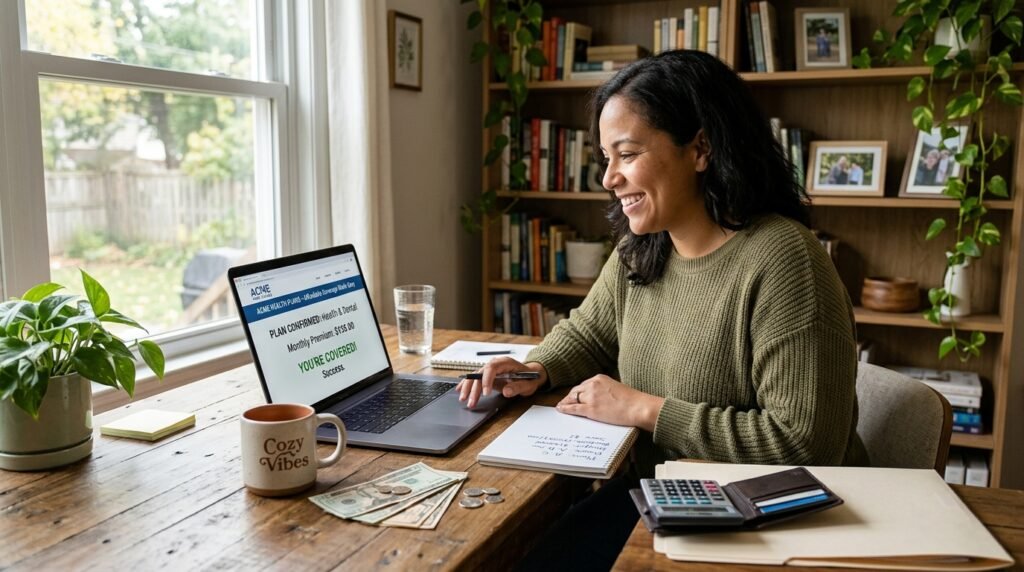
Finding a zero down car insurance option in 2026 is easier than it used to be, but you have to know where to look and understand what you’re getting.
The old model required a massive upfront payment that left many families stranded. Today, thanks to companies like OCHO, The General, and the monthly billing options from major insurers, you can get legal on the road with a much smaller initial hit to your wallet.
Here’s your action plan:
- Start with OCHO to see if you qualify for their 0% APR down payment loan. This is your best shot at true zero down .
- Compare quotes from GEICO, Progressive, and State Farm. Look at the first month’s payment, not just the monthly rate .
- Check The General if you have credit issues or a lapse in coverage .
- Read the fine print on any buy-now-pay-later offer. Make sure you understand when payments are due and what happens if you’re late.
- Keep continuous coverage once you’re insured. That 201-day mark is real, and it will open doors to better rates and lower down payments in the future .
The most important thing is to get insured legally. Driving without insurance risks tickets, license suspension, and financial ruin if you cause an accident. A zero down car insurance option might cost a little more over time, but it’s infinitely cheaper than the alternative.
Go get covered. Your wallet—and your peace of mind—will thank you.
Leave a Reply